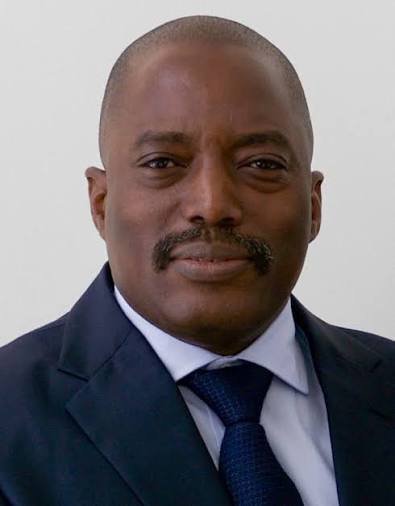
Joseph Kabila Biography: Age, Early Life, Presidency, Family, Political Career, and Latest News

Joseph Kabila Biography: Age, Early Life, Presidency, Family, Political Career, and Latest News
Joseph Kabila is one of the most important and controversial political figures in the modern history of the Democratic Republic of the Congo. He ruled the country from 2001 to 2019, becoming president after the assassination of his father, Laurent-Désiré Kabila. Over nearly two decades in power, Joseph Kabila became known for overseeing the formal end of the Second Congo War, participating in the drafting of a new constitution, and presiding over elections that shaped Congo’s postwar political order. At the same time, his years in office were marked by criticism over governance, corruption, delayed elections, political unrest, and insecurity in eastern Congo.
In recent years, Joseph Kabila has remained in the headlines even after leaving office. In 2025, he faced major legal and political pressure in the DRC, including the suspension of his political party, the lifting of his immunity, and later a military court sentence in absentia tied to accusations related to armed conflict in the east. Kabila denied wrongdoing and described the judicial process as politicized. Those developments are a big reason his name still attracts strong search interest today.
This detailed biography covers Joseph Kabila’s age, birthplace, education, family, rise to power, presidency, achievements, controversies, political legacy, and the latest news.
Quick Profile
| Field | Details |
|---|---|
| Full name | Joseph Kabila Kabange |
| Known for | Former President of the Democratic Republic of the Congo |
| Date of birth | June 4, 1971 |
| Age | 54 years old in 2026 |
| Place of birth | Sud-Kivu province, Democratic Republic of the Congo |
| Nationality | Congolese |
| Occupation | Politician, former army officer |
| Father | Laurent-Désiré Kabila |
| Mother | Sifa Mahanya |
| Spouse | Olive Lembe di Sita |
| Presidency | 2001 to 2019 |
| Political affiliation | Associated with the People’s Party for Reconstruction and Democracy (PPRD) |
| Post-presidency role | Senator for life under Congo’s constitution |
| Religion | Often reported as Protestant in older profile sources |
Who is Joseph Kabila?
Joseph Kabila is a Congolese politician and former army officer who served as president of the Democratic Republic of the Congo from 2001 to 2019. He became president after the assassination of his father, Laurent-Désiré Kabila, and later remained influential in Congolese politics as a senator for life and leader linked to the PPRD. In 2025, he returned to the news because of major legal and political accusations related to the conflict in eastern Congo.
Early Life and Background
Joseph Kabila was born on June 4, 1971, in Sud-Kivu province in what is now the Democratic Republic of the Congo. He is the son of Laurent-Désiré Kabila, the revolutionary leader who later became president of the country after overthrowing Mobutu Sese Seko in 1997. Joseph grew up in a political and military environment shaped by rebellion, exile, and regional conflict. That background had a deep influence on the role he would later play in Congolese politics.
Because his father spent years involved in insurgent movements, Joseph Kabila’s upbringing was not that of a conventional political heir raised in palace comfort. Accounts of his youth often describe him as reserved, disciplined, and heavily shaped by military structures. Some older biographical profiles state that he attended English-language schools in Tanzania during part of his early education, reflecting the cross-border life of many Congolese political families during years of instability.
Even before he became widely known on the global stage, Kabila had already been introduced to the realities of power, insecurity, and armed struggle. These experiences later contributed to his image as a quiet military man rather than a charismatic populist speaker.
Education and Military Formation
Public information about Joseph Kabila’s formal education has always been somewhat limited compared with many world leaders, and that mystery has contributed to his guarded public image. Older reference profiles report that he studied in Tanzania and later developed military experience through service linked to his father’s movement. Much of his early adult life was connected to armed and political struggle rather than a highly public academic career.
His military identity became central to how he was presented when he first rose to office in 2001. At the time, many observers saw him as young, disciplined, and relatively unknown. This combination made him appear both promising and vulnerable. Supporters believed his military background could help stabilize a country devastated by war, while critics feared that limited public political experience would leave him dependent on entrenched networks around him.
Family and Personal Life
Joseph Kabila comes from one of the most influential political families in Congolese history. His father, Laurent-Désiré Kabila, served as president of the DRC before being assassinated in January 2001. His mother is Sifa Mahanya. The Kabila family name became deeply tied to the state, military power, and post-Mobutu politics.
Joseph Kabila is married to Olive Lembe di Sita. Public reporting and older biographical records have also noted that the couple have children, though Kabila has generally kept his private life more shielded than many modern politicians.
One of the striking things about Joseph Kabila’s personal image is how little of it has been shaped by public storytelling. Unlike leaders who build strong emotional bonds through speeches, memoirs, and interviews, Kabila often appeared distant and controlled. That helped him project seriousness, but it also made him seem opaque to both supporters and critics.
How Joseph Kabila Became President
Joseph Kabila became president of the Democratic Republic of the Congo in January 2001 after the assassination of his father, Laurent-Désiré Kabila. He formally took office on January 26, 2001, at a time when the country was in the middle of the Second Congo War, one of the deadliest conflicts in modern African history. The transition was sudden, tense, and full of uncertainty.
His rise to power surprised many people because he was still relatively young and not yet a widely recognized public figure internationally. But in the context of Congo’s crisis, his selection provided continuity for the ruling system while also offering the possibility of a reset in relations with regional and international actors.
At the moment he entered office, the DRC was fractured by war, foreign intervention, rebel activity, and internal political division. That meant Kabila’s first challenge was not simply governing a country. It was trying to hold one together.
Joseph Kabila and the End of the Second Congo War
One of the biggest events associated with Joseph Kabila’s early presidency was the effort to end the Second Congo War. The conflict, which officially ran from 1998 to 2003, involved multiple African states, rebel groups, and massive humanitarian suffering. During Kabila’s presidency, peace negotiations and transitional arrangements gradually moved the country toward a formal end to the war.
This period helped build his image abroad as a leader more open to diplomacy than his father had been. International actors viewed him as someone who could engage in peace talks and work with external mediators. That did not mean peace came quickly or completely. Eastern Congo in particular remained unstable, and violence continued even after the official end of the broader war. Still, the peace process under his leadership marked a major chapter in modern Congolese history.
For many biographers, this is the first major pillar of his legacy: Joseph Kabila was the young leader who inherited a country at war and presided over its formal postwar transition.
The 2006 Constitution and Elections
Joseph Kabila’s years in office were closely linked to Congo’s new constitutional order. A new constitution was promulgated in 2006, and the country held elections that year as part of its transition from wartime governance. Britannica identifies the 2006 constitution and the elections of 2006, 2011, and 2018 as some of the key milestones of his presidency.
The 2006 election was especially significant because it was part of the country’s attempt to rebuild democratic institutions after years of conflict. Kabila won and secured an electoral mandate beyond the emergency legitimacy he inherited in 2001. Supporters saw this as a sign that the country was moving toward constitutional rule. Critics, though, pointed to structural weaknesses, fragile institutions, and the immense challenge of holding credible elections in such a vast and conflict-affected nation.
Either way, the 2006 period mattered hugely for Kabila’s biography. It transformed him from the son of an assassinated president into an elected national leader.
The 2011 Election and Rising Criticism
The 2011 presidential election further entrenched Joseph Kabila’s power, but it also intensified criticism of his rule. Britannica notes that the 2011 vote was disputed, and that dispute fed into a broader pattern of opposition frustration, international concern, and domestic mistrust.
By this stage, Kabila was no longer viewed mainly as a transitional figure. He had become the face of the Congolese state. That meant he increasingly carried responsibility not only for stabilizing the country but also for its persistent problems: insecurity, weak infrastructure, poverty, limited state capacity, corruption allegations, and democratic backsliding.
Opposition groups accused his administration of undermining political competition. Civil society activists increasingly raised alarm over restrictions, delays, and the shrinking credibility of institutions. In biographies and political analysis alike, this period is often described as the point when Kabila’s image shifted sharply from postwar reformer to entrenched incumbent.
Delayed Elections and the Crisis Over His Tenure
One of the most controversial parts of Joseph Kabila’s career came when elections were delayed beyond the expected end of his constitutional mandate. The issue triggered protests, political tension, and deep public debate over whether he intended to remain in power indefinitely.
Although the details of electoral scheduling in the DRC were shaped by logistical and political complications, critics argued that delays benefited Kabila and weakened democratic accountability. This episode became central to his legacy because it touched on the most important question in post-conflict politics: whether leaders who promise constitutional order are willing to surrender power when the time comes.
Eventually, Kabila did step down in 2019, allowing the country’s first peaceful transfer of power since independence in 1960, according to Britannica. That remains one of the most historically important facts about his presidency, even though the transition itself remained politically complex and heavily scrutinized.
Joseph Kabila’s Achievements
Any balanced biography of Joseph Kabila should include the achievements his supporters and some neutral observers associate with his time in office.
First, he presided over a crucial postwar transition and was involved in the period that formally ended the Second Congo War. In a country shattered by one of Africa’s deadliest conflicts, that alone was historically significant.
Second, his presidency was linked to the adoption of the 2006 constitution, which provided an institutional framework for elections and governance in the postwar era.
Third, he oversaw the 2019 transfer of power, which Britannica describes as the first peaceful transfer of power since the country became independent in 1960. Even critics who questioned the political arrangements behind that transition generally recognized its symbolic importance.
Fourth, Kabila maintained a strong regional and international profile during years when Congo remained central to African diplomacy, conflict resolution, and economic interest. Whether admired or criticized, he was undeniably one of the defining African heads of state of his era.
Joseph Kabila’s Controversies
Joseph Kabila’s political career is impossible to separate from controversy. His presidency was repeatedly criticized over election credibility, democratic space, human rights concerns, and the slow pace of reform. International organizations, opposition voices, and many analysts accused his administration of consolidating power rather than deepening democracy.
The most politically damaging long-term criticism was that he delayed the democratic process when his constitutional term was nearing its end. For opponents, this became proof that his government prioritized survival over reform.
Questions about corruption and elite patronage also followed his rule. Although not all accusations produced courtroom outcomes, Kabila’s name became associated with the broader criticism often directed at political systems in resource-rich but institutionally fragile states: that wealth, power, and state access were concentrated in narrow networks.
Then came the much more dramatic post-presidency allegations. In 2025, the DRC government suspended the PPRD and ordered the seizure of Kabila’s assets over accusations that he supported Rwanda-backed rebels in the east. Reuters reported that the Senate later voted to lift his immunity from prosecution, clearing the way for charges including alleged treason and war crimes. Kabila rejected the process and said the justice system had been politicized. In September 2025, Reuters and AP reported that a military court sentenced him to death in absentia on charges including treason and war crimes.
Those developments pushed his biography into a new and more explosive phase. He was no longer only a former president under criticism. He had become the subject of one of the most dramatic legal-political confrontations involving an ex-African head of state in recent years.
Life After the Presidency
After leaving office in 2019, Joseph Kabila remained influential in Congolese politics. Under Congo’s constitution, former presidents become senators for life, and Britannica notes that he assumed that role after stepping down.
He also remained linked to the People’s Party for Reconstruction and Democracy, or PPRD, one of the major political forces associated with his era. Even outside the presidency, Kabila’s networks and alliances continued to shape the political environment.
His post-presidency years showed that leaving office did not mean disappearing. Like many former leaders in politically tense systems, he remained both symbol and actor: a symbol of the old order and an actor still capable of influencing the future.
Latest News About Joseph Kabila
Joseph Kabila remained a major news figure throughout 2025. In April 2025, Reuters reported that he said he would return to Congo to help find a solution to the crisis in the war-ravaged east. Around the same time, AP reported that he returned from self-imposed exile to Goma, a city in eastern Congo associated with the conflict zone.
In April 2025, Reuters also reported that Congolese authorities suspended his political party and ordered his assets seized amid accusations that he supported the M23 rebels. In May 2025, Reuters and AP reported that the Senate voted to lift his immunity, while Kabila denounced the move and accused the government of acting like a dictatorship. Later in May, Reuters reported that he made a public appearance in rebel-held Goma, where he met religious leaders in what participants described as a peace effort.
The most dramatic turn came on September 30, 2025, when Reuters and AP reported that a military court in Kinshasa convicted Kabila in absentia of treason, war crimes, and related charges, sentencing him to death. AP added that the court also ordered massive financial damages. Kabila denied the accusations and said the proceedings were politically driven.
As of March 24, 2026, those 2025 developments remain the most recent major widely reported turning points in Joseph Kabila’s public story based on the sources reviewed here.
Joseph Kabila’s Political Legacy
Joseph Kabila’s legacy is deeply divided. To supporters and some historians, he was the leader who inherited a country torn apart by war and helped steer it toward a constitutional and post-conflict framework. To critics, he represents the failures of postwar governance in Congo: delayed democratic transition, political opacity, weak accountability, and the endurance of elite-centered rule.
Both views contain real pieces of the story. He did preside over landmark changes, including the constitutional process and the first peaceful transfer of power. But he also governed during years when many Congolese felt democratic hopes were not fully realized.
What makes Joseph Kabila such a compelling biography subject is exactly this contradiction. He is neither a simple hero nor a simple villain in the historical record. He is a leader whose life runs through the core tensions of modern Congo: war and peace, democracy and power, state-building and elite control, continuity and upheaval.
Is Joseph Kabila Still Influential?
Yes, Joseph Kabila remains influential, even outside office. Former presidents in many African states continue to shape party structures, elite alliances, and regional politics, and Kabila is a clear example. The very fact that Congolese authorities treated him as a major political threat in 2025 shows that he still mattered to the national balance of power.
His continued public appearances, political statements, and legal battles demonstrate that his story is not finished. For that reason, biography articles about Joseph Kabila still draw readers who want to understand both Congo’s recent history and its uncertain future.
Joseph Kabila Net Worth
There is no single authoritative, up-to-date, and fully verified public figure for Joseph Kabila’s personal net worth in the reliable sources reviewed here. Many websites publish unverified estimates, but those numbers often conflict and are not dependable enough for a factual biography article. What can be said with confidence is that he long occupied one of the most powerful offices in central Africa and has been linked to significant political and economic networks.
Frequently Asked Questions
How old is Joseph Kabila?
Joseph Kabila was born on June 4, 1971. That makes him 54 years old in 2026.
Where is Joseph Kabila from?
He was born in Sud-Kivu province in the Democratic Republic of the Congo.
Who is Joseph Kabila’s father?
His father was Laurent-Désiré Kabila, the former president of the Democratic Republic of the Congo.
When did Joseph Kabila become president?
He became president on January 26, 2001, after the assassination of his father.
How long did Joseph Kabila rule Congo?
He served as president from 2001 to 2019.
What party is Joseph Kabila associated with?
He is associated with the People’s Party for Reconstruction and Democracy, also known as the PPRD.
What happened to Joseph Kabila in 2025?
In 2025, he faced a series of major developments, including the suspension of his political party, the lifting of his immunity, and a military court sentence in absentia on charges including treason and war crimes. He denied wrongdoing and criticized the process as political.
Conclusion
Joseph Kabila’s biography is tightly woven into the modern history of the Democratic Republic of the Congo. Born into a revolutionary family, shaped by military struggle, and propelled to power by tragedy, he led the country through war, constitutional change, disputed elections, and a landmark transfer of power. Yet his record remains heavily contested, and the legal and political events of 2025 proved that his influence and controversy did not end when his presidency did.
